Ensuring Clinical Continuity Through HIPAA-Aware IT Operations
In today's fast-paced medical environments, patient care relies on seamless, secure technology. For clinics and healthcare facilities across Tampa Bay and the broader Florida region, balancing clinical operations with HIPAA-aware IT infrastructure is a critical daily challenge. Practice administrators and compliance leads must ensure that doctors and nurses have immediate access to patient data while maintaining rigorous compliance standards. While this article does not constitute legal advice, understanding the intersection of healthcare IT and HIPAA themes is essential for safeguarding your practice.
Prioritizing EHR Uptime for Clinical Continuity
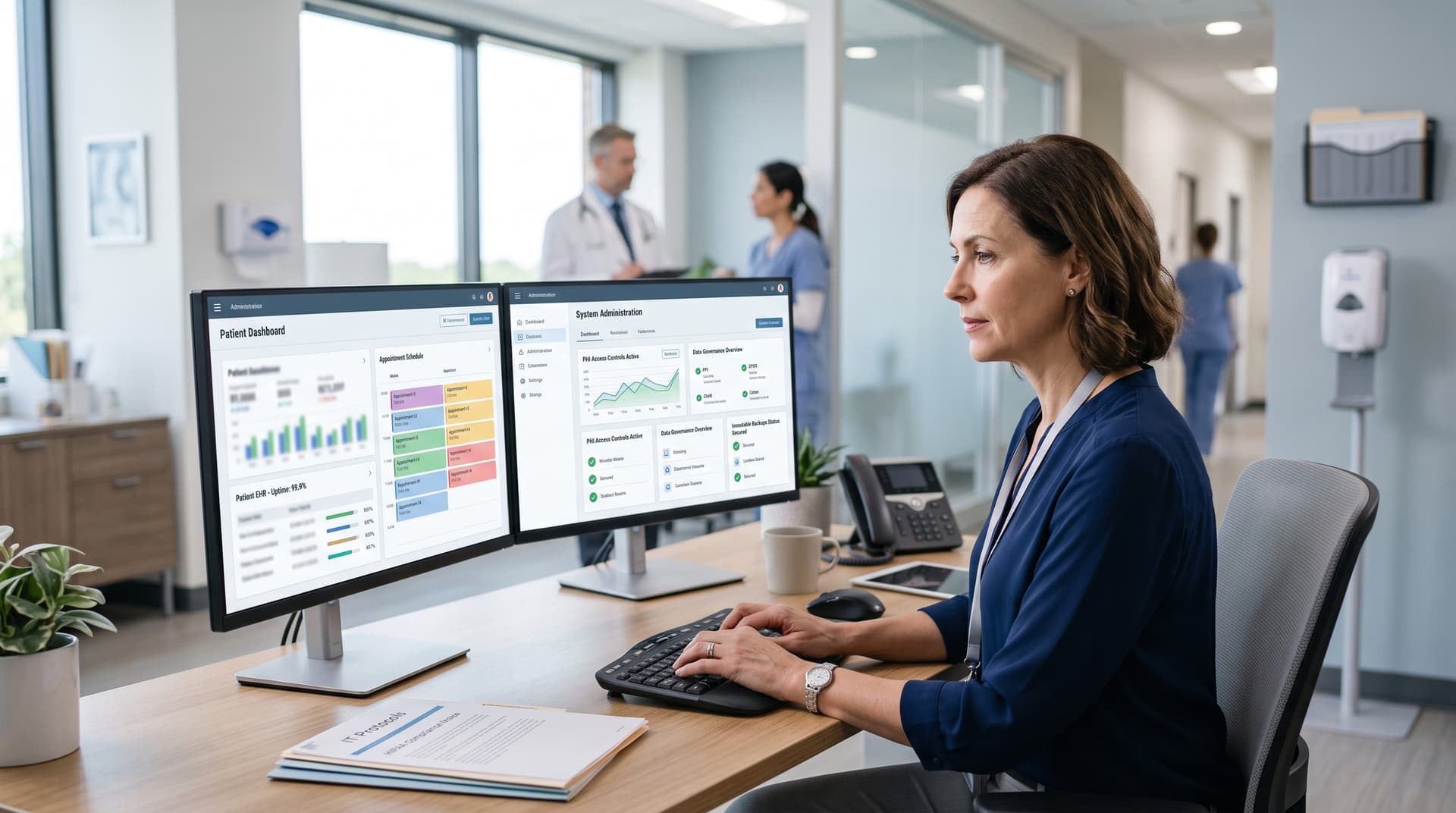
Electronic Health Record (EHR) systems are the heartbeat of modern medical practices. When an EHR goes offline, clinical workflows grind to a halt, directly impacting patient care and safety. Maintaining high EHR uptime requires resilient network architecture, including redundant internet connections and proactive monitoring. By treating EHR availability as a clinical necessity rather than just an IT metric, practices can ensure uninterrupted care delivery.
Implementing Rigorous PHI Access Controls
Protecting Protected Health Information (PHI) is a foundational element of healthcare IT. However, security measures must not impede a clinician's ability to treat patients. Implementing role-based access controls (RBAC) ensures that staff members only have access to the information necessary for their specific duties. Multi-factor authentication (MFA) and single sign-on (SSO) solutions can further secure PHI while providing a frictionless login experience for fast-moving clinical staff.
Managing Vendor BAAs and Third-Party Risk
Modern medical practices rely on a web of third-party vendors, from telehealth platforms to specialized billing software. Under HIPAA guidelines, any vendor handling PHI must execute a Business Associate Agreement (BAA). A robust healthcare IT strategy includes strict vendor management, ensuring that every technological partner meets your compliance standards. Failing to secure a BAA before deploying a new tool introduces significant operational and compliance risks.
Securing Data with Immutable Backups
Healthcare organizations remain prime targets for ransomware attacks due to the sensitive and critical nature of medical data. Standard backups are no longer sufficient, as advanced ransomware can seek out and encrypt backup files. Implementing immutable backups—data that cannot be altered or deleted once written—provides a failsafe recovery option. In the event of a cyber incident, immutable backups allow your practice to restore critical systems quickly without paying a ransom.
Mitigating Phishing Risks Among Clinical Staff
Clinical environments are inherently high-stress and fast-paced. Attackers exploit this urgency by sending targeted phishing emails designed to look like urgent patient referrals or internal administrative alerts. Protecting your practice requires a dual approach: deploying advanced email filtering solutions to block threats before they reach the inbox, and conducting regular, empathetic security awareness training tailored to clinical workflows. Staff must be empowered to recognize threats without feeling burdened by complex security protocols.
Secure Your Practice with Bitscaled
Navigating the complexities of healthcare IT requires a partner who understands both clinical operations and compliance rigor. If you are concerned about your practice's technological resilience or data security posture, professional guidance is crucial.
Request a HIPAA-aligned IT assessment from Bitscaled today to ensure your infrastructure supports clinical continuity while keeping patient data secure.