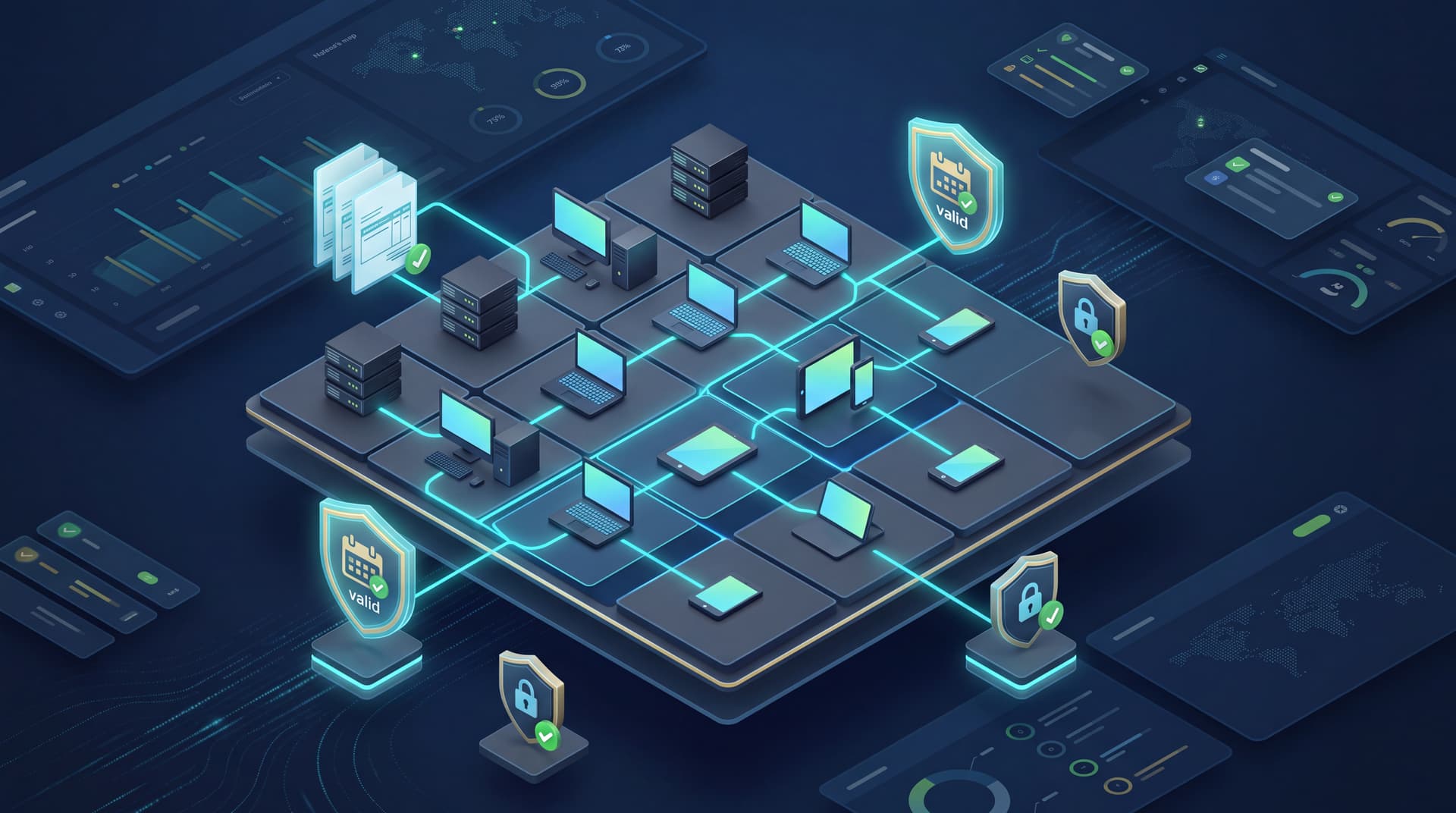
Establishing Single-Source Asset Truth: Reconciling RMM with Procurement
In modern enterprise IT, asset drift is a constant operational tax. Untracked hardware, unmapped warranty expirations, and missing security agents accumulate quietly across hybrid environments. To maintain compliance and cost efficiency, IT asset managers and compliance leads must bridge the gap between active runtime discovery and financial procurement records.
Through the /platform/assets interface, Bitscaled Workspace unifies hardware telemetry with purchase histories to establish an unquestionable single source of truth.
1. Reconciling Live RMM Discovery with Purchase Records
Automated Remote Monitoring and Management (RMM) tools are excellent at identifying active network endpoints, but they lack fiscal context. Conversely, procurement ledgers record capital expenditure but fail to verify whether a device is currently online or properly configured.
To achieve true inventory integrity, organizations must continuously reconcile these two domains:
- Serial Number Matching: Automatically map active MAC addresses and chassis serials reported by RMM agents against vendor invoices and purchase orders.
- Identifying Phantom Assets: Highlight devices present on the ledger that have never checked in via RMM, signaling shipping delays, lost inventory, or unassigned hardware.
- Detecting Shadow Devices: Flag unauthorized or unrecorded hardware connecting to corporate networks prior to proper onboarding.
2. Proactive Warranty and Lifecycle Management
Lapsing hardware warranties introduce severe operational and financial risk. Relying on manual spreadsheets leads to missed coverage windows and expensive out-of-warranty hardware replacements.
By pulling warranty start and end dates directly into the primary asset ledger, IT teams can:
- Automate Expiration Alerts: Receive automated notices 90, 60, and 30 days prior to warranty expiration.
- Plan Refresh Cycles: Align hardware replacement budgets with actual asset age and usage telemetry rather than arbitrary timelines.
- Optimize Vendor Contracts: Consolidate support contracts across OEMs by keeping vendor entitlement details attached to active device records.
3. Enforcing Security Baselines per Device Class
An accurate asset inventory is the foundation of endpoint security. However, security requirements vary across endpoint tiers. Workstations, developer rigs, operational servers, and point-of-sale terminals require distinct security posture baselines.
Within Bitscaled Workspace, asset managers can group hardware by device class to ensure standard compliance benchmarks:
- Workstation Baseline: Verify active EDR agents, full-disk encryption (BitLocker/FileVault), and routine OS patching.
- Server Infrastructure: Enforce strict privilege controls, vulnerability scanning, and immutable backup agent presences.
- Specialized Endpoints: Apply tailored compliance policies for air-gapped or legacy hardware.
Conclusion
Maintaining inventory truth requires continuous, automated alignment between hardware telemetry, procurement history, and security policies. By eliminating blind spots between RMM discovery and asset management, your organization reduces security vulnerability surfaces and optimizes IT spend.
Clean up asset inventory drift with Bitscaled Workspace.