The Imperative for Governed AI Adoption
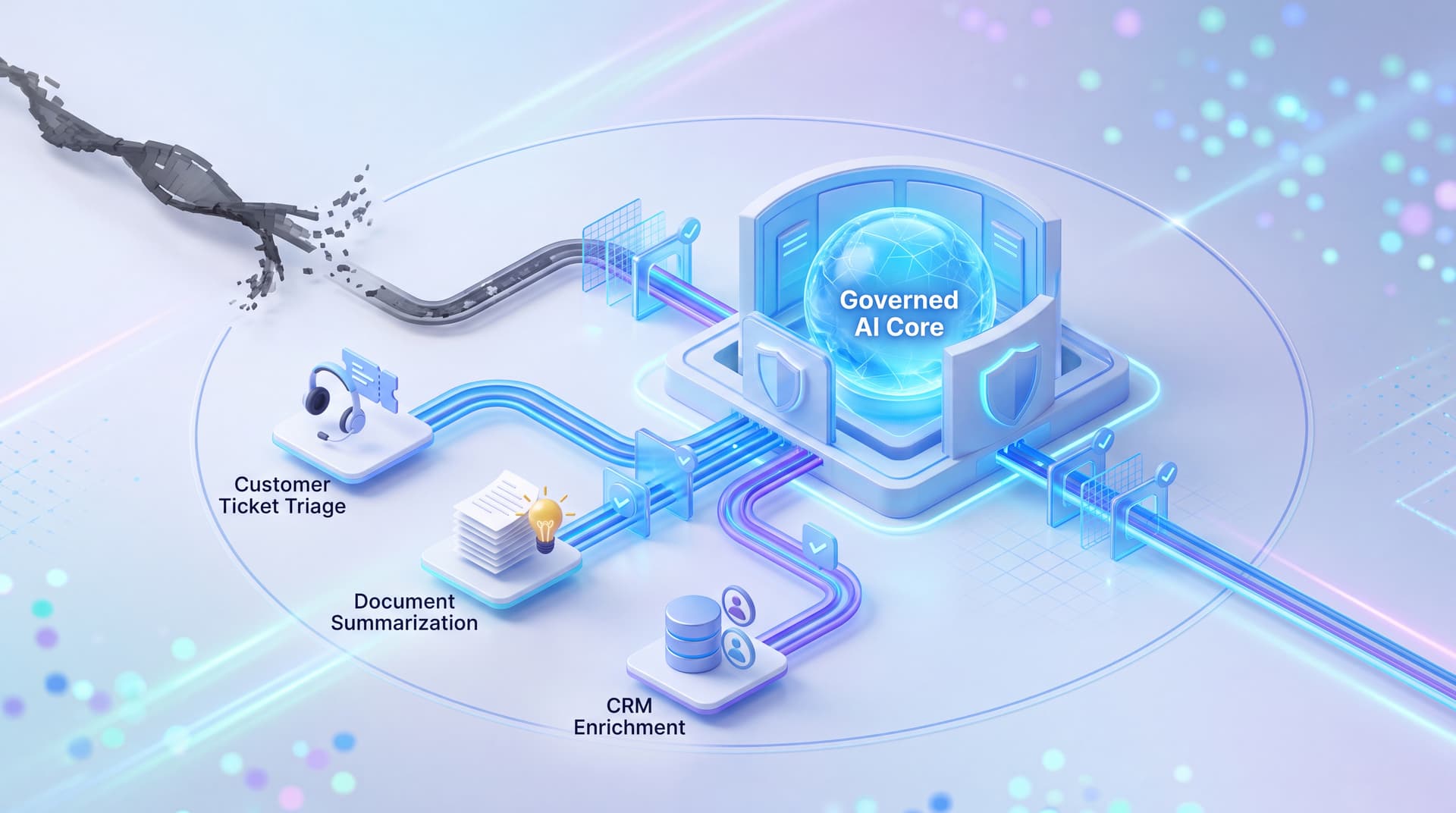
The rush to implement AI automation often outpaces the guardrails needed to protect enterprise data. For IT leaders and Managed Service Providers (MSPs), the primary challenge is no longer finding capable AI tools—it is preventing shadow IT and ensuring that AI adoption is strictly governed. Building AI workflows requires a pragmatic approach that balances efficiency with uncompromising security.
The Four Pillars of Governed AI
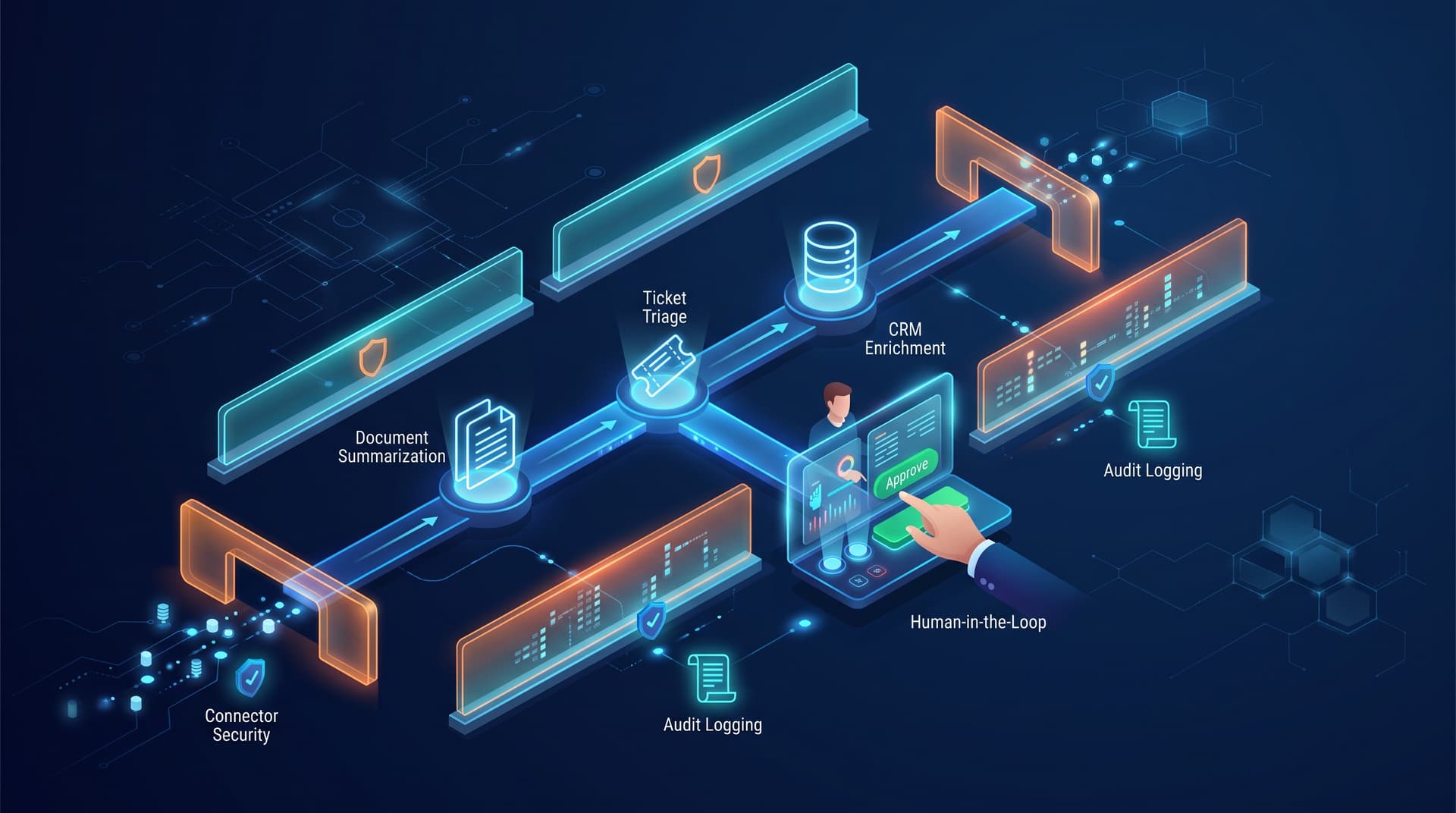
To safely deploy AI across your enterprise, your architecture must be built on four foundational pillars:
- Data Boundaries: Strict ring-fencing ensures that proprietary enterprise data is never used to train public Large Language Models (LLMs). Enterprise tenants must be configured with zero-retention policies.
- Approval Flows: Implementing 'human-in-the-loop' checkpoints prevents autonomous AI actions from executing critical changes without authorized review.
- Comprehensive Logging: Every AI prompt, response, and executed action must be logged in a centralized, immutable audit trail for compliance and troubleshooting.
- Connector Security: API integrations linking AI to your core systems must operate on the principle of least privilege, restricting access to only the data necessary for the immediate task.
High-Demand Use Cases (and Their Inherent Risks)
MSP clients consistently request AI integration for specific, high-friction operational tasks. While the ROI is substantial, each use case carries unique risks that must be managed through governance.
1. Automated Ticket Triage
The Use Case: AI analyzes incoming IT support tickets, categorizes them by issue type, assesses urgency, and routes them to the appropriate engineering tier. The Risk: AI models can hallucinate priority levels or misinterpret context, potentially burying critical infrastructure alerts. Additionally, users often include sensitive passwords or PII in tickets, which could be exposed if sent to unsecured public models.
2. Document Summarization
The Use Case: Extracting key clauses, deliverables, and summaries from lengthy legal contracts, vendor agreements, or compliance reports. The Risk: Document leakage. If data boundaries are not strictly enforced, highly confidential intellectual property could be absorbed into external data sets, violating client trust and regulatory requirements.
3. CRM Enrichment
The Use Case: Automatically parsing post-meeting transcripts, emails, and support calls to update client CRM records with new stakeholders, action items, and sentiment analysis. The Risk: Overwriting accurate, historical CRM data with flawed AI inferences. Without human-in-the-loop approval flows, bad data can silently propagate through your sales and operational pipelines.
Moving Forward with Confidence
AI workflow integration does not have to be a gamble with your data security. By prioritizing data boundaries, enforcing approval flows, and maintaining rigorous logging, organizations can harness the power of AI automation without exposing themselves to shadow IT vulnerabilities.
Talk to Bitscaled about AI workflow pilots with guardrails and measurable ROI. Our team can help you build secure, governed AI integrations tailored to your operational needs.