Moving Beyond the Audit: How SMBs Should Prioritize Security Findings
For many small and medium-sized businesses (SMBs), completing a comprehensive security assessment is a major milestone. However, the resulting report can often be overwhelming, delivering a dense list of vulnerabilities, policy gaps, and technical debt. For IT directors, managing partners, and compliance officers, the challenge immediately shifts from identifying risks to acting on them.
Without a structured approach, organizations risk falling into "checklist theater"—the practice of treating security merely as a compliance box-checking exercise rather than a meaningful defense strategy. Effective security consulting transforms these raw findings into an actionable risk roadmap.
Structuring Your Risk Roadmap
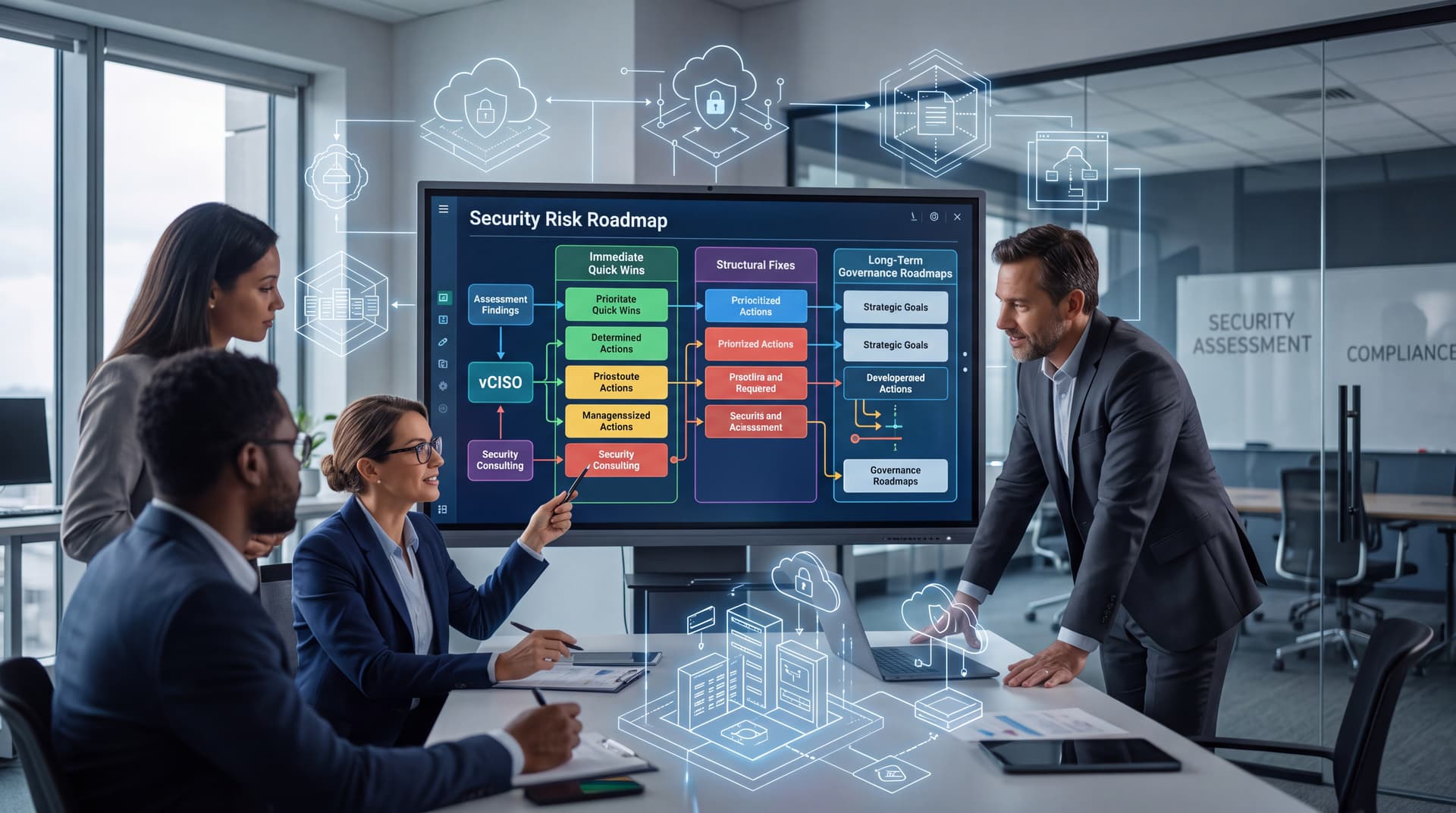
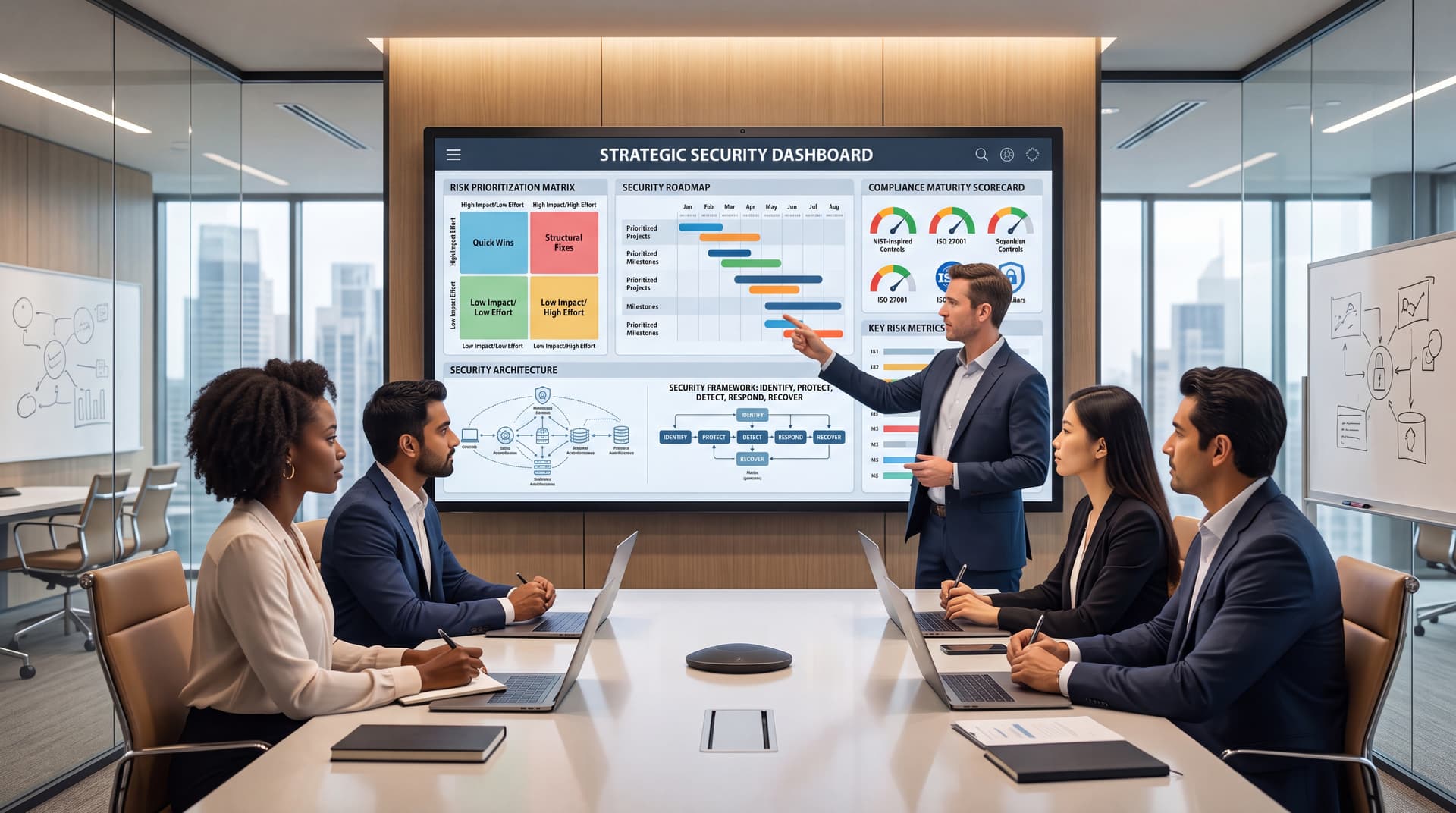
When reviewing assessment results, it is crucial to categorize remediation efforts to maintain momentum and manage budgets effectively. We recommend triaging findings into three distinct phases:
1. Quick Wins
Quick wins are high-impact, low-effort changes that drastically reduce your attack surface without requiring massive capital investment or workflow disruptions.
- Examples: Enforcing Multi-Factor Authentication (MFA) across all critical accounts, disabling legacy protocols, and patching known critical vulnerabilities on public-facing assets.
- Goal: Immediate risk reduction and demonstrating rapid ROI to executive stakeholders.
2. Structural Fixes
Structural fixes require more planning, budget, and potential downtime. These are the core architectural changes necessary for long-term resilience.
- Examples: Segmenting networks, migrating from legacy on-premises servers to secure cloud infrastructure, and implementing zero-trust access controls.
- Goal: Building a robust foundation that limits lateral movement during a potential breach.
3. Governance and Policy
Technology alone cannot secure an organization. The final tier involves the rules, training, and oversight that govern how your team interacts with your systems.
- Examples: Updating Incident Response (IR) plans, establishing vendor risk management policies, and conducting role-based security awareness training.
- Goal: Creating a culture of security that aligns with regulatory frameworks and business objectives.
Evidence Collection for Auditors
Prioritizing fixes is only half the battle; you must also prove to auditors and regulators that these controls are operating effectively. Gathering evidence should not be a frantic scramble at the end of the year.
A strategic security consulting partner or vCISO can help automate and standardize evidence collection. Ensure your systems are configured to generate unalterable logs, automated compliance reports, and timestamped policy acknowledgments. Auditors look for continuous compliance, meaning your evidence must demonstrate that controls are enforced consistently, not just during the audit window.
Avoiding Checklist Theater
Checklist theater occurs when organizations implement superficial controls solely to satisfy an auditor, leaving actual operational vulnerabilities exposed. For example, writing a password policy but failing to enforce it technically.
To avoid this, SMBs must shift their mindset from passing a test to building genuine resilience. Every control implemented on your risk roadmap should serve a dual purpose: satisfying a compliance requirement and demonstrably reducing operational risk. Engaging with a vCISO ensures that your security investments are aligned with actual threat models rather than just regulatory minimums.
Take the Next Step
Transforming a raw list of vulnerabilities into a prioritized, evidence-based strategy requires expertise. If your organization needs help navigating the complexities of compliance and risk management, Bitscaled is here to help.
Request a scoped security assessment from Bitscaled today, and let our security consulting team build a custom risk roadmap tailored to your business objectives.