As enterprise IT teams and Managed Service Providers (MSPs) rush to harness artificial intelligence, the operational tension between speed and security has reached a critical tipping point. Business units frequently demand rapid AI integration to streamline routine tasks, while security officers and compliance leads face the threat of rogue API keys, unvetted Large Language Model (LLM) endpoints, and unintentional data exfiltration.
Without intentional governance, ad-hoc automation rapidly devolves into shadow IT. Employees copy sensitive client communications into public AI portals, or custom scripts hook low-privilege models directly into core databases without authorization gates. Realizing sustainable efficiency requires moving away from unmanaged scripts toward structured, enterprise-grade AI integration.
By leveraging custom AI Development Services, organizations can deploy intelligent automation while maintaining strict boundary controls, comprehensive audit logging, and explicit human-in-the-loop oversight.
The Four Pillars of Governed AI Integration
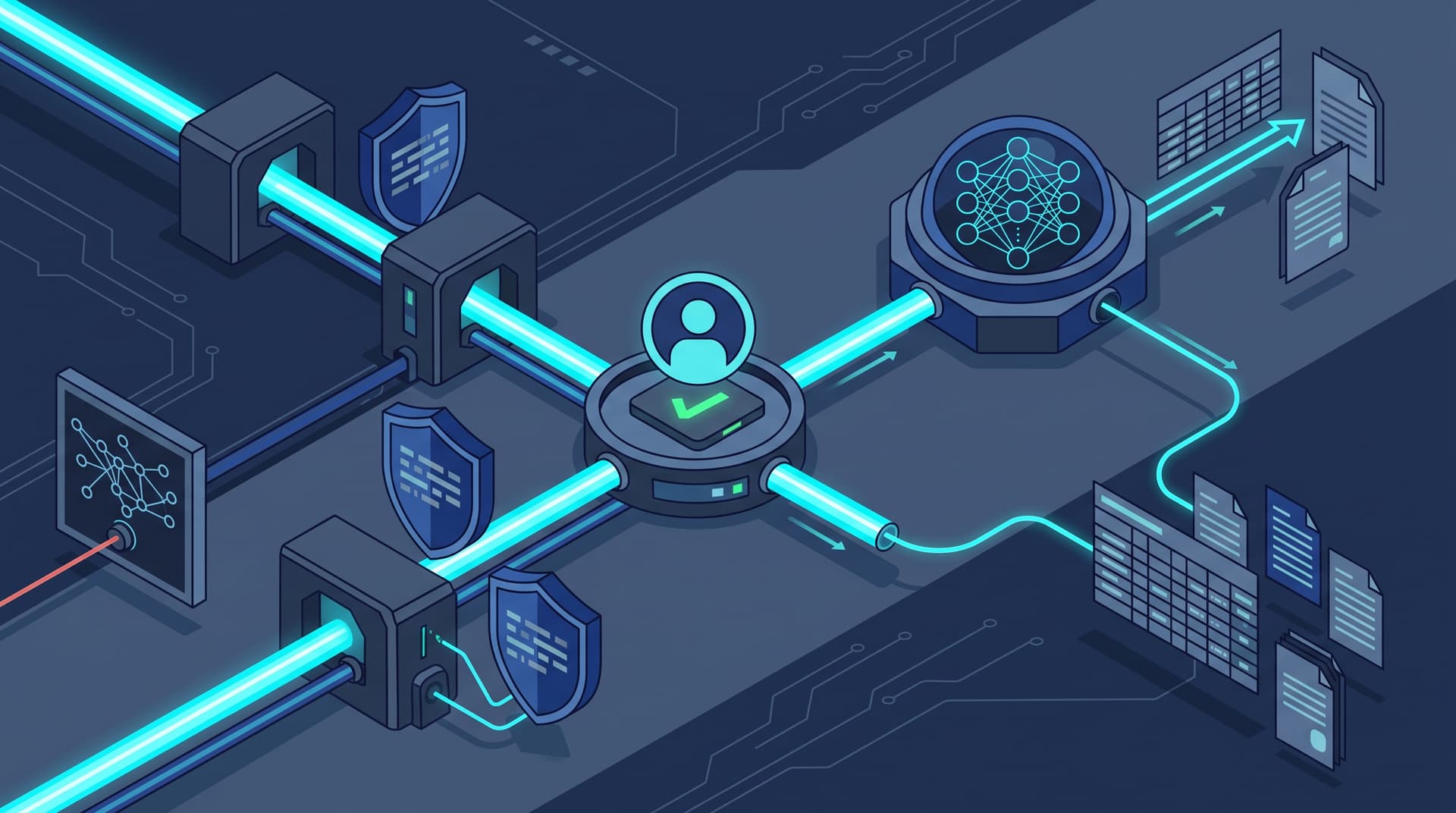
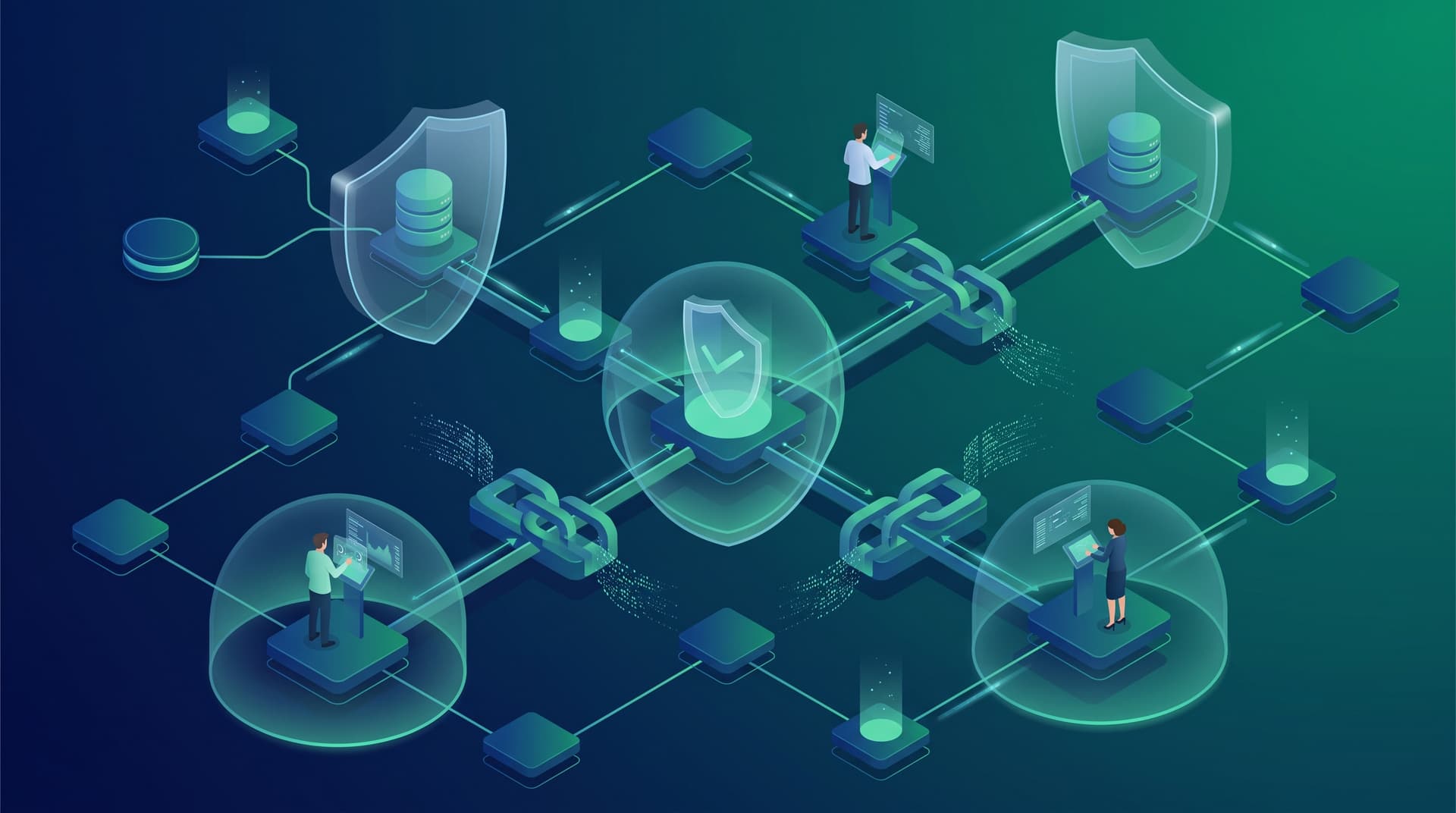
To safely bridge foundation models with production enterprise environments, organizations must embed governance directly into the integration architecture rather than treating compliance as a secondary review process. A robust framework rests on four core technical pillars:
1. Hard Data Boundaries and Ingestion Sanitization
Data privacy is the cornerstone of governed AI. AI models must never ingest unencrypted, unredacted sensitive operational data, Personally Identifiable Information (PII), or proprietary intellectual property unless strictly authorized under zero-data-retention (ZDR) commercial agreements.
- PII and Secret Masking: Automated pre-processing pipelines strip social security numbers, API tokens, passwords, and client names before payloads leave the internal network perimeter.
- Tenant Isolation: Multi-tenant MSP platforms must enforce logical separation at the API proxy layer, ensuring data from Client A never informs prompt contexts or retrieval indexes for Client B.
- Retrieval-Augmented Generation (RAG) Guardrails: Vector databases storing internal documentation must mirror strict Role-Based Access Controls (RBAC), ensuring users only retrieve information they have explicit permission to read.
2. Human-in-the-Loop Approval Flows
Full autonomy is rarely appropriate for high-stakes operational workflows. Governed adoption introduces deterministic decision thresholds that route AI outputs through human validation gates before downstream systems execute changes.
- Deterministic Thresholds: Actions exceeding designated confidence thresholds or financial impact limits require explicit user confirmation.
- Conditional Approval UI: Reviewers receive pre-calculated summaries and context cards within their primary workspaces (such as ticketing systems or messaging channels), allowing one-click approvals or inline corrections.
3. Comprehensive Audit Logging and Observability
If an automated agent modifies a database or sends an external notification, security teams must possess full visibility into the execution chain. centralizing telemetry within platform systems like Bitscaled Platform Governance ensures complete auditability.
- Prompt and Payload Telemetry: Record the raw prompt, sanitized model payload, system response, temperature setting, and exact model version used.
- Execution Lineage: Link human sign-offs to specific AI-generated recommendations, creating an immutable log for compliance audits and incident post-mortems.
4. Secure Connector Architecture and Least Privilege
Directly exposing database write keys or administrative credentials to LLM agents creates catastrophic attack vectors. Connectors between models and core software must operate under strict service proxies.
- Scoped OAuth Tokens: Restrict AI integrations to narrow API scopes (e.g., read-only access to specific tables or write access limited to staging queues).
- API Gateways & Rate Limits: Route all AI calls through monitored API gateways that enforce throttling, circuit breaking, and schema validation on outbound actions.
3 High-Value MSP Use Cases and Their Risk Profiles
To understand how governed integration functions in practice, consider three primary automation workflows requested by MSP clients, along with the operational risks and necessary guardrails for each.
1. Automated Ticket Triage and Routing
The Practical Application
Inbound helpdesk tickets arrive continuously with inconsistent descriptions, inaccurate priority tags, and missing metadata. An AI triage agent analyzes inbound ticket text, extracts technical intent, categorizes the incident, assigns priority scores, and routes the work item directly to the specialized engineering pod.
Operational Risks
- Sensitive Credential Exposure: End-users frequently paste cleartext passwords, remote access links, or sensitive HR details directly into ticket bodies.
- Cascading Priority Errors: Misclassifying a critical server outage as a low-priority request due to ambiguous user phrasing leads to severe SLA breaches.
Governance Controls
Implement a pre-ingestion regex and Named Entity Recognition (NER) pipeline to sanitize sensitive data before model processing. Enforce a rule where high-impact priority changes (e.g., escalating to P1) automatically require confirmation from a Tier-1 dispatcher on the Service Desk Interface.
2. Executive Document and Incident Summarization
The Practical Application
Following a major infrastructure incident or quarterly service review, engineers aggregate disparate monitoring logs, vendor tickets, and uptime reports. An AI workflow summarizes these lengthy technical artifacts into clean, executive-ready digests for business stakeholders.
Operational Risks
- Model Hallucinations: Generative models may invent outage durations, misstate resolution steps, or fabricate performance metrics.
- Cross-Client Data Leakage: Summarization workflows handling multi-client contract documents risk blending proprietary data if vectors are improperly partitioned.
Governance Controls
Constrain summarization models using strict grounded context (RAG) that restricts the AI to explicit source chunks. Embed citation footnotes pointing back to raw log files, and require account managers to validate the summary before dispatching it to external clients.
3. CRM Data Enrichment and Lifecycle Nurturing
The Practical Application
Sales and account management teams spend hours manually updating customer records, tracking technology renewal dates, and researching account background. An automated AI workflow scrapes public domain updates, summarizes client earnings filings, enriches contact details, and updates CRM fields.
Operational Risks
- Data Poisoning & Overwrites: Ingesting untrusted web content can introduce malicious inputs or overwrite pristine database records with incorrect external data.
- Unauthorized Outbound Communications: Unchecked auto-responders generating direct emails risk sending inaccurate pricing or legally binding promises.
Governance Controls
Direct AI enrichments into read-only staging tables or custom temporary fields rather than overwriting master database records. Outbound communication prompts must generate drafts stored in pending queues, requiring human sales representatives to click send.
Operational Comparison: Governed vs. Unmanaged AI Integration
| Capability / Feature | Unmanaged Scripting (Shadow AI) | Governed AI Architecture | Benefit to Enterprise Operations |
|---|---|---|---|
| Data Privacy | Raw data sent directly to public endpoints | Automated PII masking & tenant isolation | Eliminates regulatory non-compliance |
| System Access | Broad administrative API keys | Scoped micro-service proxies | Limits blast radius of compromised tokens |
| Execution Oversight | Unchecked autonomous execution | Human-in-the-loop approval gates | Prevents hallucinated actions & errors |
| Auditability | Zero persistent interaction history | Immutable logging of inputs & sign-offs | Simplifies compliance & incident investigation |
| Model Flexibility | Hardcoded vendor lock-in | Pluggable API model routing | Facilitates seamless LLM upgrades |
Takeaway: Governance is not an obstacle to AI velocity; it is the structural scaffolding that enables enterprise teams to scale automation safely without legal, security, or financial exposure.
Establishing Your Governed AI Pilot
Transitioning from experimental AI tools to production-ready workflows requires a deliberate, phased strategy:
- Audit Existing Workflows: Identify informal AI usage across your organization and map all data flows touching external LLM vendors.
- Define Data Scopes: Establish clear policy guidelines determining which classification levels (Public, Internal, Confidential) are eligible for model processing.
- Build the Integration Middleware: Implement localized proxy gateways responsible for payload sanitization, token scoping, and central event logging.
- Start with Human-Validated Use Cases: Launch pilots in operational areas where human oversight is already part of the standard operating procedure, such as draft ticket responses or staging-table CRM updates.
- Measure Impact & Refine: Evaluate pilots based on cycle-time reduction, accuracy rates, and error avoidance before expanding autonomous permissions.
By prioritizing data boundaries, explicit approvals, and connector security, organizations can harness the transformative potential of artificial intelligence while remaining fully protected against operational risks.
Learn how Bitscaled AI Development Services can help you architect custom automation solutions. Talk to Bitscaled about AI workflow pilots with guardrails and measurable ROI.