Governed AI Integration: Operationalizing Enterprise Automation Without Risk
Organizations are eager to capture the productivity gains of artificial intelligence, but unmanaged adoption risks creating critical vulnerabilities. From data exposure to unvetted API connectors, deploying AI without guardrails introduces severe compliance and operational hazards. Achieving sustainable value requires a pragmatic, governance-first strategy for AI workflow integration.
The Four Pillars of Governed AI Adoption
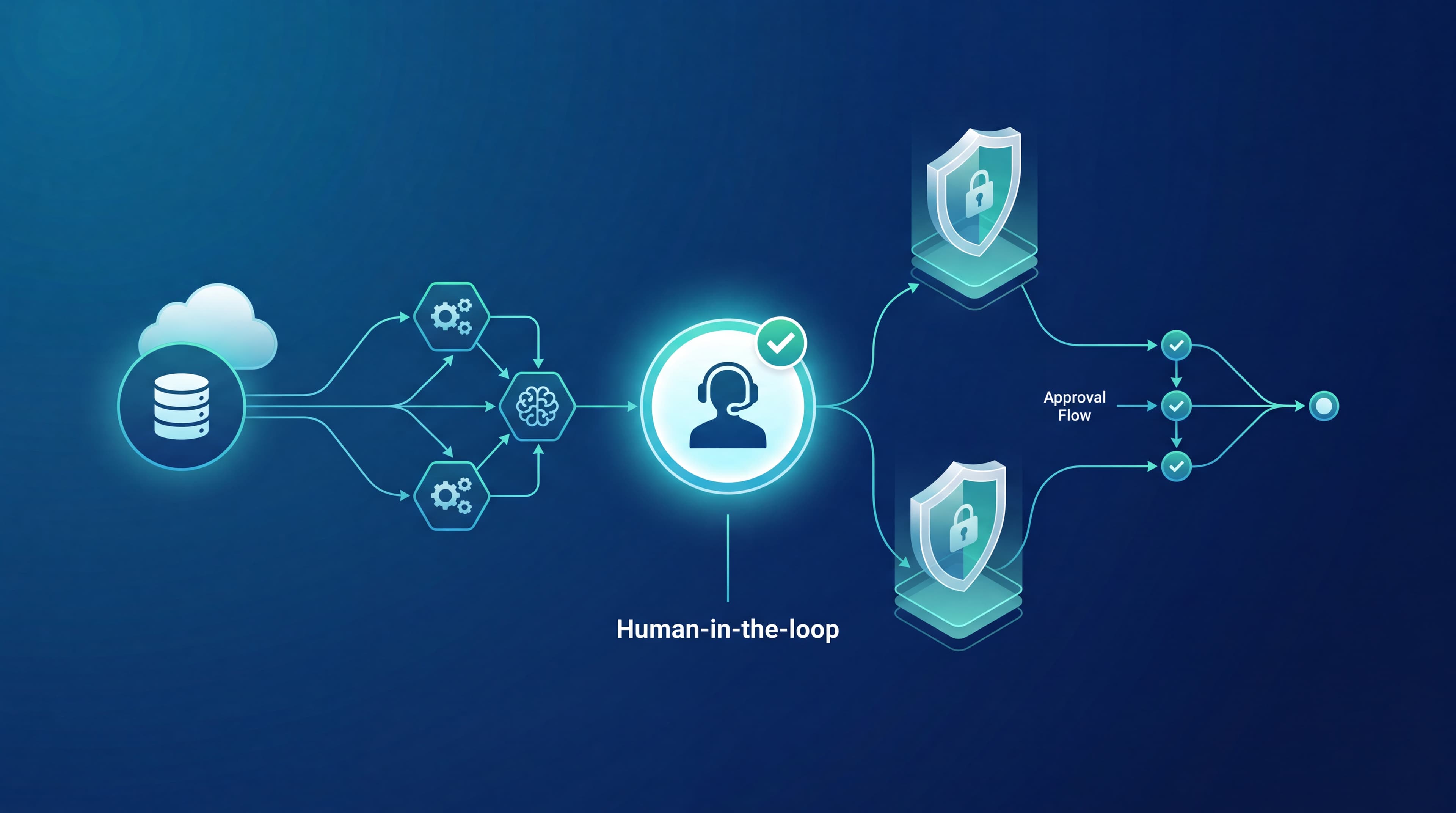
Before launching AI workflows into production, organizations must establish an enterprise-grade control framework resting on four key technical pillars:
- Data Boundaries: Restrict AI models from training on proprietary operational data. Implement strict tenant isolation and localized data processing boundaries to prevent cross-contamination.
- Approval Flows (Human-in-the-Loop): Embed explicit human sign-offs for high-impact actions. Automated decisions should execute only after validated by authorized personnel.
- Comprehensive Audit Logging: Record every model input, output, system prompt, and execution timestamp to ensure compliance readiness and operational traceability.
- Connector Security: Enforce zero-trust principles across all API integrations, utilizing scoped service accounts, rotated keys, and a least-privilege access model.
3 High-Impact MSP Use Cases and Their Guardrails
1. Automated Ticket Triage and Routing
- The Application: AI agents analyze incoming support tickets, classify urgency, tag categories, and draft initial diagnostic responses.
- Associated Risk: Incorrect categorization or accidental leakage of sensitive PII contained within ticket bodies to external LLM endpoints.
- Governance Guardrail: Pre-process ticket text through local PII scrubbing filters before passing data to sanitized endpoints, and mandate dispatcher review prior to automated client communication.
2. Document Summarization and Data Extraction
- The Application: Ingesting complex vendor contracts, SLAs, or technical documentation to extract key dates, terms, and action items.
- Associated Risk: Hallucinations missing critical contractual obligations or cross-tenant exposure of confidential client documents.
- Governance Guardrail: Enforce strict retrieval-augmented generation (RAG) bounds where answers must cite specific source paragraphs, coupled with role-based access control (RBAC) on source file repositories.
3. CRM Data Enrichment
- The Application: Automatically synthesizing meeting notes, email exchanges, and public company data to update pipeline records.
- Associated Risk: Overwriting accurate operational records with inaccurate synthesized text or exceeding API permissions across third-party CRMs.
- Governance Guardrail: Implement staging tables where enriched data is held for human validation, and restrict CRM connector write privileges to designated custom fields.
Transitioning from Experimentation to Production
Governed AI adoption does not slow innovation—it accelerates it by providing clear parameters within which teams can safely experiment. By standardizing authentication, logging, and human checkpoints, organizations eliminate shadow IT risks while building a resilient foundation for long-term automation.
Ready to elevate your operational efficiency safely? Talk to Bitscaled about AI workflow pilots with guardrails and measurable ROI.