Zero-Downtime Logistics IT: Solving WMS Latency and RF Scan Gun Drops in Florida Facilities
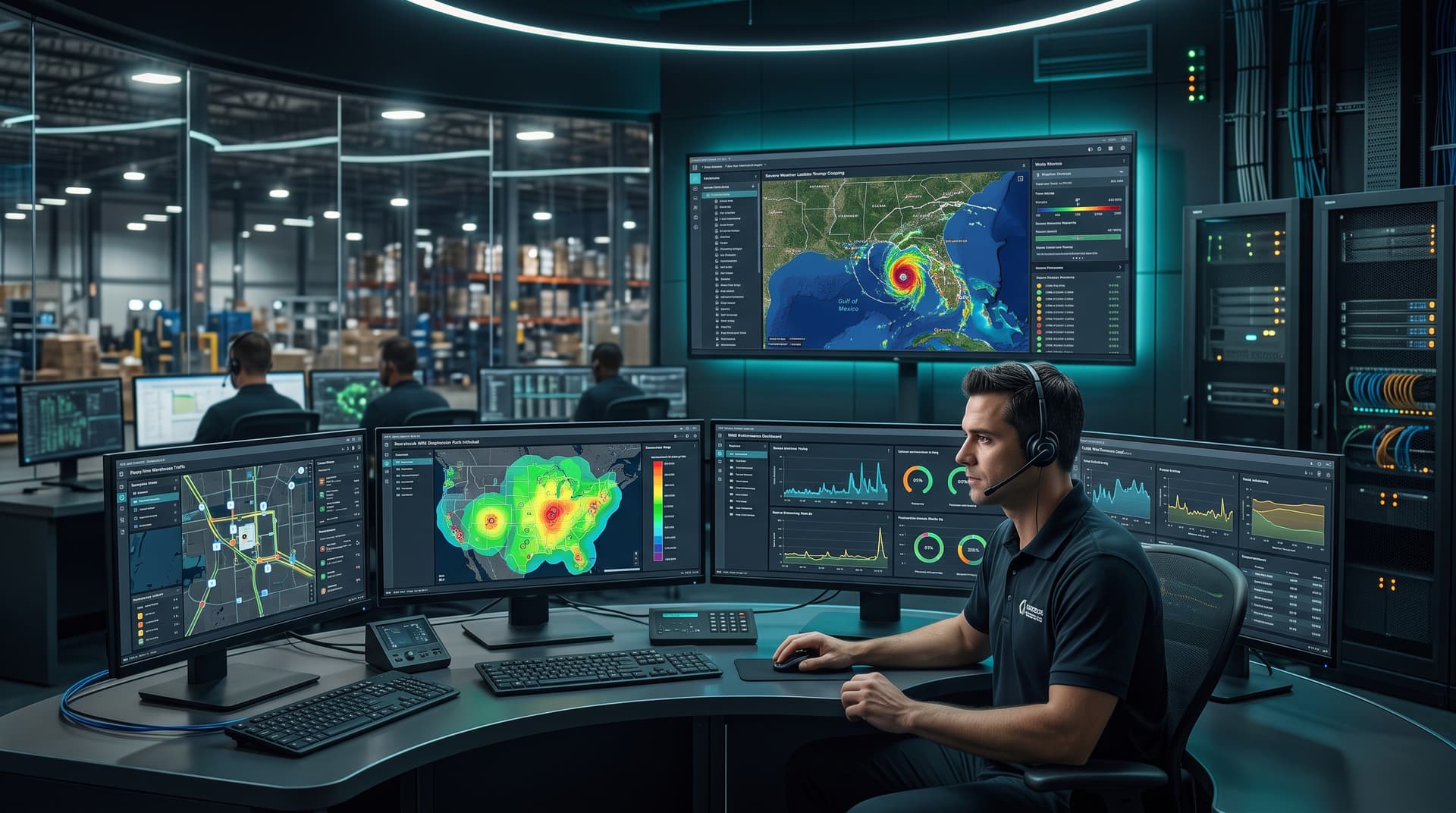
In high-velocity warehouse environments, every second counts. When an RF scan gun disconnects during order picking or a Warehouse Management System (WMS) experiences high network latency, order fulfillment halts immediately. For Florida logistics facilities, these operational hurdles are compounded by severe summer storm seasons, power fluctuations, and round-the-clock shift demands.
To maintain maximum throughput and protect operational margins, logistics and transportation leaders must address core infrastructure vulnerabilities before they impact dispatch timelines.
Eliminating RF Scan Gun Disconnections Across Deep Racking
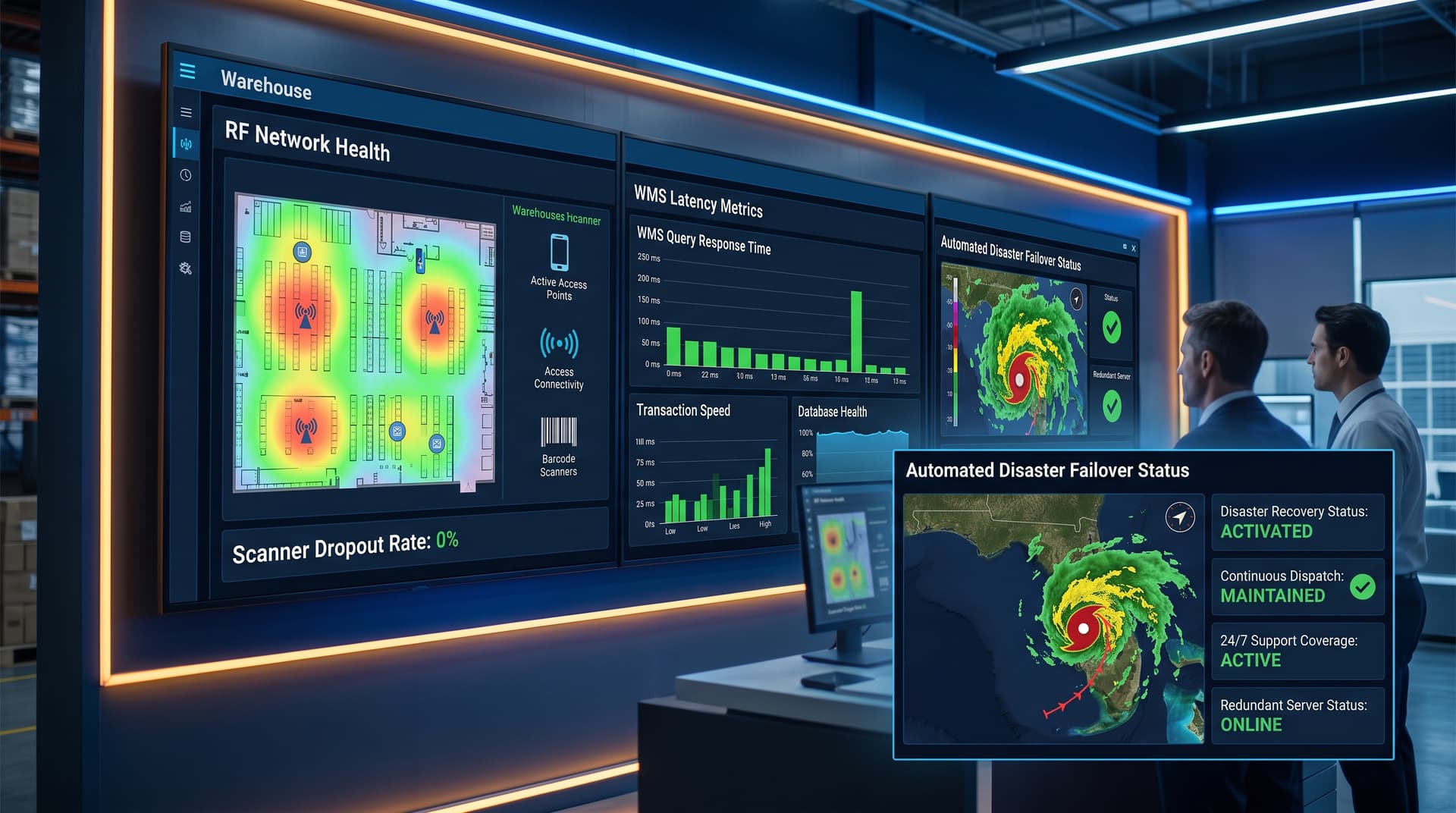
RF scan gun dropouts are rarely an equipment flaw; they are almost always caused by improper wireless network architecture. High-density pallet racks, metal shelving, and liquid containers absorb and reflect Wi-Fi signals, creating dead zones in high-density storage bays.
To ensure uninterrupted picking and staging:
- Deploy Directional Access Points: Position enterprise-grade Wi-Fi 6 access points above aisle lines rather than directly over rack centers.
- Configure Seamless Fast-Roaming: Implement 802.11r and 802.11k protocols so mobile terminals hand off smoothly between access points while pickers move rapidly down aisles.
- Implement Dual-Band RF Tuning: Isolate barcode scanners on dedicated 5 GHz or 6 GHz channels, steering non-essential warehouse traffic to separate networks.
Reducing WMS and TMS Latency for Fast Dispatch
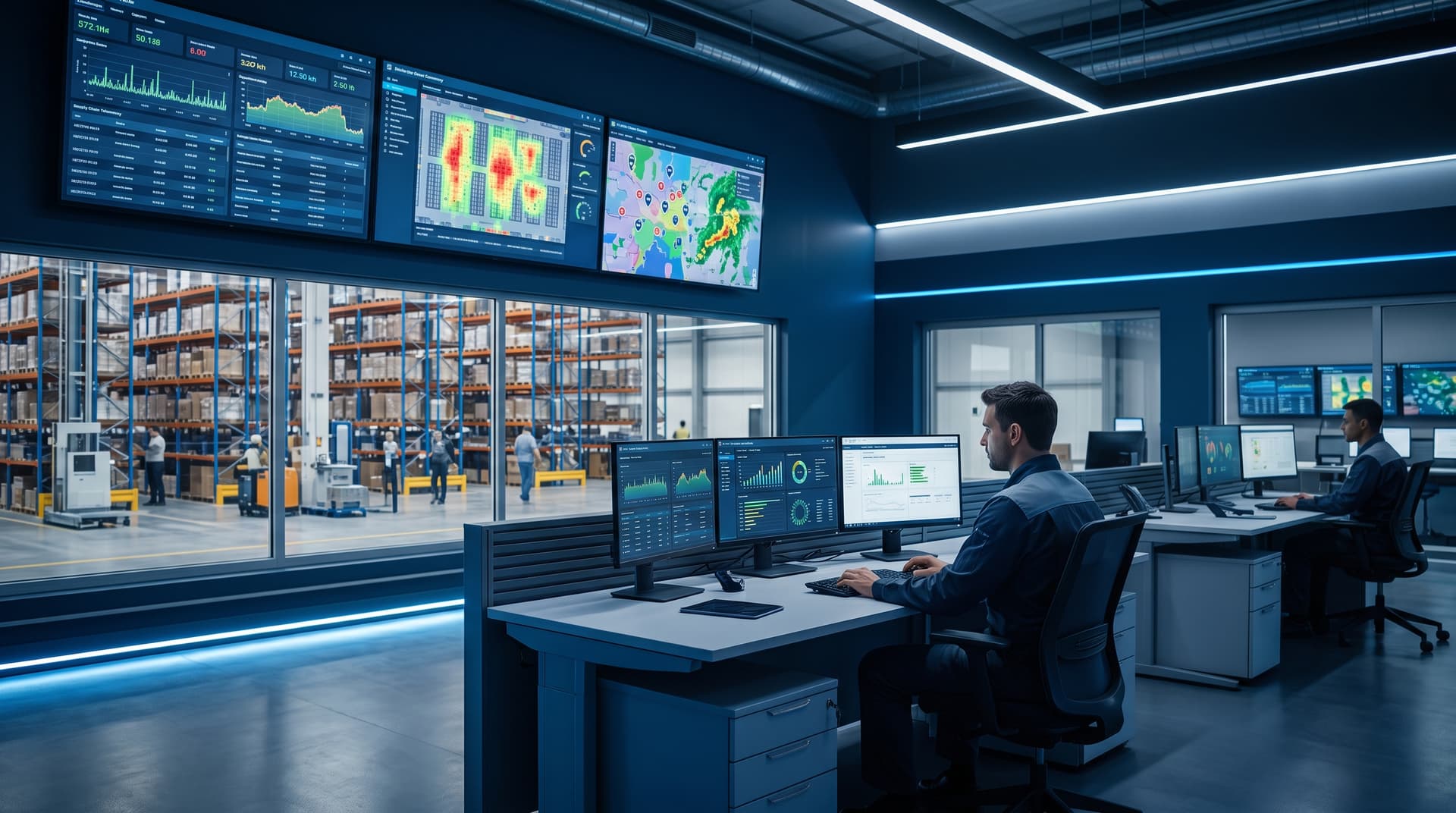
Latency between hand-held terminals, cloud-hosted WMS databases, and Transportation Management Systems (TMS) creates costly friction at loading docks. A two-second delay per scan multiplies into hundreds of lost hours across a multi-shift operation.
Optimizing system speed requires targeted network tuning:
- Local Edge Caching and QoS: Prioritize real-time WMS transactions over background data syncing using Quality of Service (QoS) rules at the switch and router level.
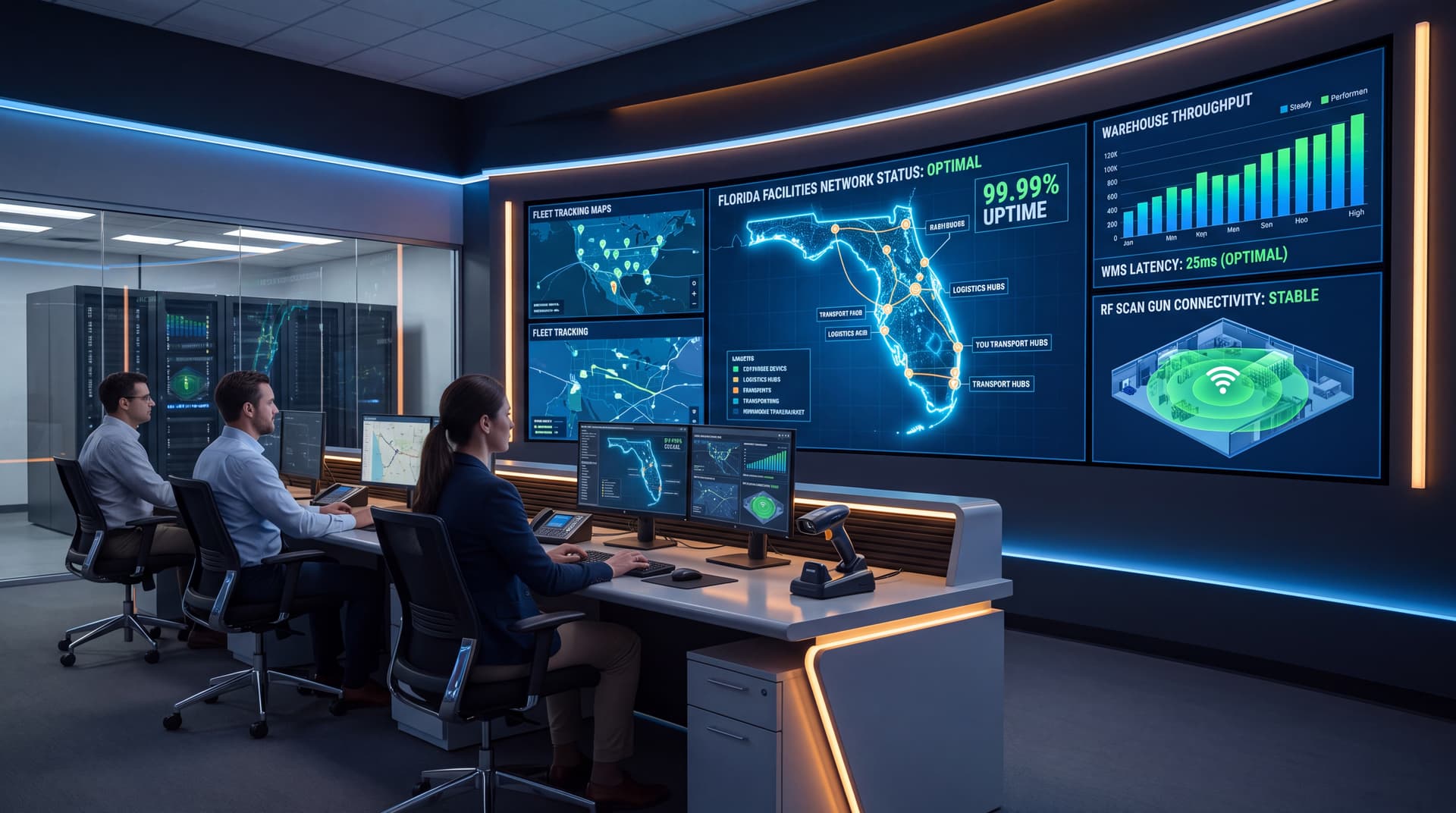
- Redundant High-Bandwidth Gateways: Utilize SD-WAN to automatically route WMS and TMS traffic across the lowest-latency fiber or satellite connections.
- Database Query Streamlining: Partner with IT specialists to audit database handshakes and ensure middleware connections between WMS and TMS do not bottleneck inventory allocation.
Fortifying Florida Facilities Against Storm-Season Disruptions
Florida’s tropical weather patterns bring sudden power drops, lightning strikes, and facility isolations. A sudden outage during peak picking hours can corrupt active database sessions and render picking queues unreadable.
A resilient storm-season continuity strategy includes:
- Uninterruptible Power Supply (UPS) Backups: Battery systems designed to keep core network racks, access points, and edge gateways powered during transfer to generator power.
- Automatic Cellular Failover: Dual-SIM LTE/5G WAN backups that maintain WMS and TMS cloud connectivity if physical fiber lines are compromised.
- Automated Cloud Backups & Instant Failover: Continuous database snapshotting that allows immediate session restoration without inventory record loss.
Securing 24/7 After-Hours IT Support for Off-Shift Operations
Logistics does not stop at 5:00 PM. Night shifts and early morning dispatch windows are often when warehouses process their highest volume of freight. Standard 8-to-5 IT support leaves off-shift workers stranded when terminal dropouts or WMS errors occur.
Dedicated 24/7 proactive monitoring and after-hours helpdesk support ensure that network anomalies are resolved long before morning trailers arrive at the dock.
Keep Your Warehouse Moving with Bitscaled
Operational delays threaten customer SLAs and inflate labor costs. Bitscaled delivers specialized logistics IT infrastructure, high-density warehouse Wi-Fi engineering, and 24/7 continuous support tailored for high-volume distribution centers.
Improve dispatch and warehouse uptime with Bitscaled. Contact our team today for a comprehensive logistics technology assessment.