Modernizing Business Telephony: An Operational Guide to Hybrid Voice and Cloud Cutover
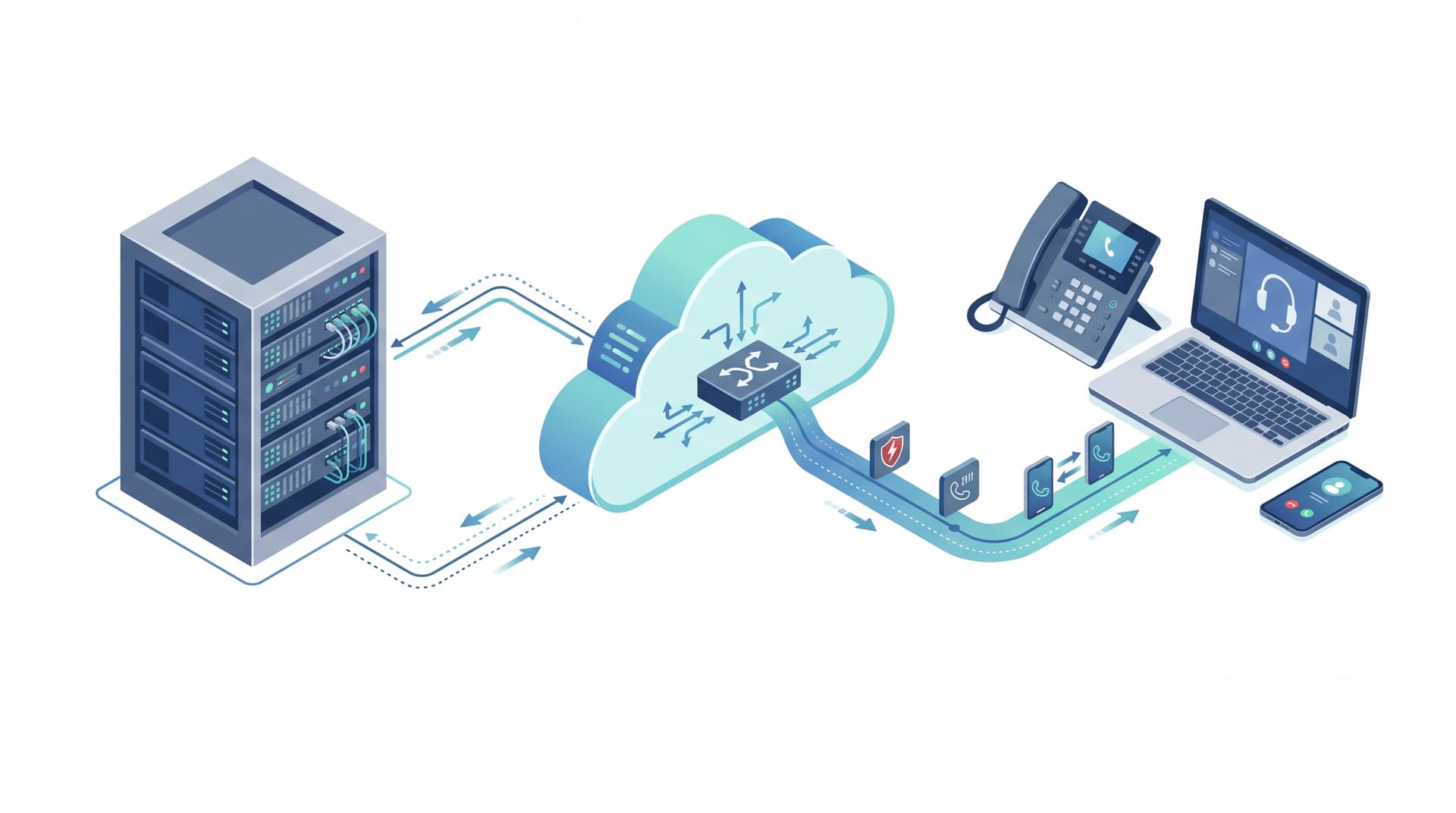
Transitioning from legacy PBX infrastructure to cloud-first voice services requires balancing reliability, regulatory compliance, and user adoption. For office managers and IT leads, designing a hybrid voice strategy provides a pragmatic bridge between existing investments and modern UCaaS platforms.
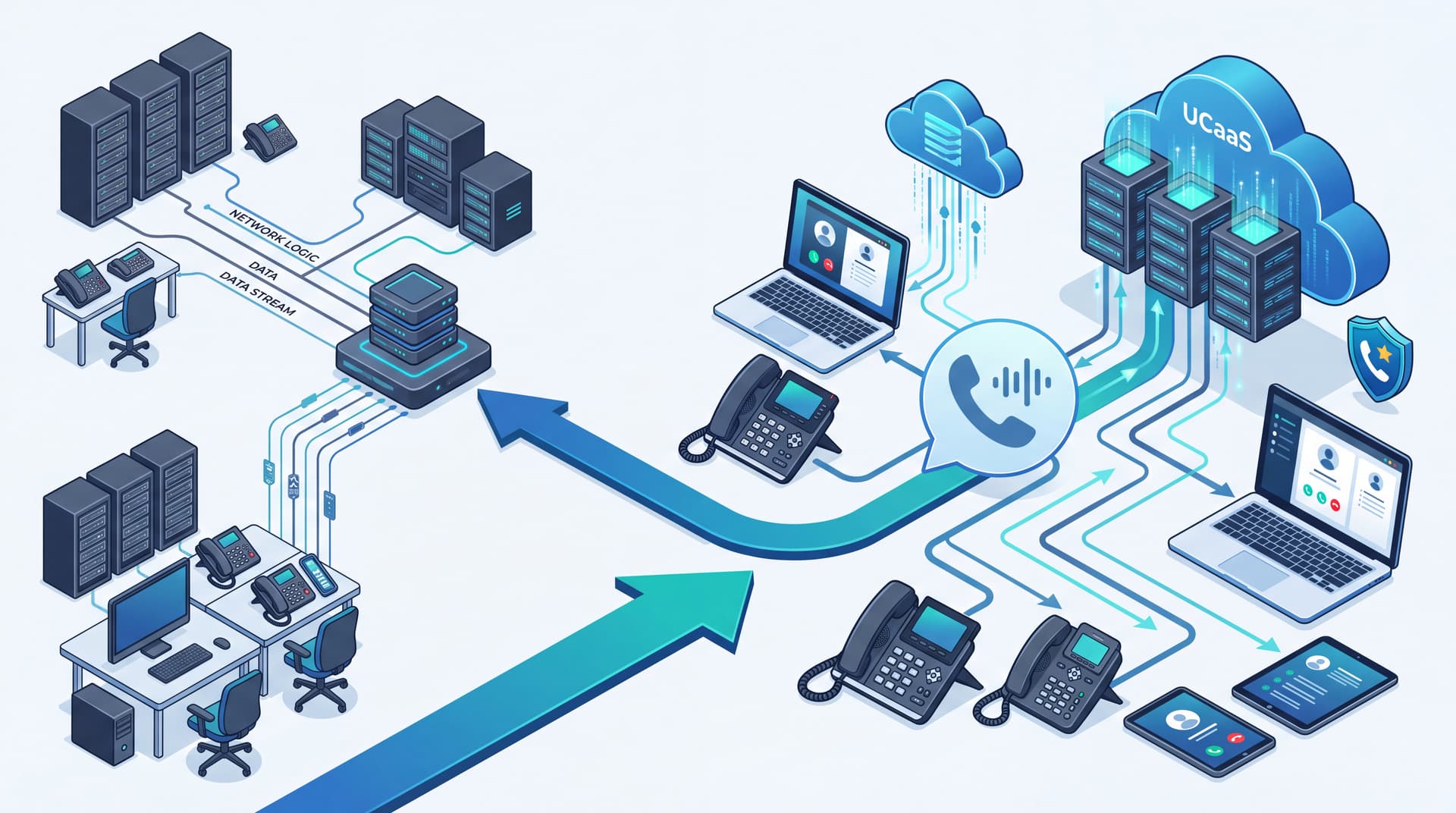
On-Premises vs. Cloud Telephony: Weighing the Trade-Offs
- On-Premises PBX: Provides complete physical control over hardware and routing local trunks. However, it incurs higher capital expenditure (CapEx), ongoing hardware maintenance, and limited flexibility for distributed or remote workers.
- Cloud Voice (UCaaS): Offers predictable operational expenditure (OpEx), instant scalability, geographic flexibility, and automatic software updates. Risk management shifts toward internet bandwidth redundancy and vendor availability SLAs.
- Hybrid Architecture: Combines local survivable branch appliances or local PSTN gateways with cloud PBX services, ensuring branch office survivability while migrating remote users to cloud platforms.
Regulatory & Technical Prerequisites: E911 and Number Porting
Deploying modern VoIP requires strict adherence to emergency location regulations and meticulous data preparation:
- E911 & Dynamic Location Services: Modern standards (including RAY BAUM'S Act and Kari's Law) require exact dispatchable location information (building, floor, suite/room) for both fixed desk phones and mobile softphones.
- Number Porting Planning: Porting existing DID (Direct Inward Dialing) ranges from legacy carriers to cloud providers requires exact matches on Account Name, Billing Telephone Number (BTN), and Service Address. Mismatched Customer Service Records (CSR) remain the leading cause of porting delays.
Microsoft Teams Phone Integration Considerations
Microsoft Teams Phone has become a primary UCaaS contender. When integrating Teams Phone into your enterprise voice stack:
- PSTN Connectivity Options: Choose between Microsoft Calling Plans, Operator Connect, or Direct Routing based on geographic coverage, pricing, and carrier preference.
- Hardware & Peripherals: Audit existing SIP endpoints. Legacy desk phones may require native Teams SIP gateway support or replacement with Teams-certified headsets and desk devices.
- Feature Parity: Verify advanced call flow requirements such as complex call queues, auto-attendants, call recording, and legacy analog device support (paging systems, fax lines).
Migration Execution: Cutover Checklist & Common Downtime Causes
Cutover Checklist
- Conduct bandwidth and QoS network assessments across all office sites.
- Validate E911 emergency call routing configurations and test dispatch notifications.
- Verify Customer Service Records (CSR) with the losing carrier prior to FOC (Firm Order Commitment) date.
- Deploy backup WAN links or LTE failover for voice traffic resilience.
- Pre-configure call queues, auto-attendants, emergency routes, and user licenses.
- Provide user onboarding guides and conduct pre-cutover softphone training.
Common Downtime Causes to Avoid
- Uncoordinated Porting Dates: Cutover scheduling without FOC confirmation leads to dropped calls during carrier transition.
- Network Bottlenecks: Inadequate Quality of Service (QoS) tagging leading to jitter, latency, and packet loss on local LAN/WAN.
- SIP Gateway Misconfigurations: Firewalls blocking SIP signaling (UDP/TCP 5060/5061) or RTP media port ranges.
Next Steps
Upgrading your voice infrastructure requires precise technical planning and seamless operational execution. Plan a VoIP migration assessment with Bitscaled to evaluate your current telephony environment, simplify carrier porting, and design a high-availability cloud or hybrid voice architecture.